how do you make marketing decisions with incomplete customer evidence?
match research effort to the cost and reversibility of a marketing decision. record what is known, what is missing, and what would change your choice.
why do customers like your product but still not buy it?
investigate why product praise fails to become a purchase. separate appeal from urgency, price, trust, switching effort, and real buying constraints.
why do customer research findings contradict each other?
investigate contradictory customer findings through sample, timing, context, and method before turning conflicting evidence into a misleading average.
how should you validate synthetic respondents? tests and limits
evaluate synthetic respondents with held-out tests, leakage checks, baselines, and calibration. examine relvo’s persona backtest and its limitations.
how do you turn customer language into credible marketing claims?
use voice-of-customer research to develop message hypotheses while separating buyer wording, product proof, and campaign performance evidence.
when will more customer interviews fail to answer your question?
choose customer interviews for explanations and context. learn when sales records, observation, or experiments are needed to answer a different question.
why is “would you buy this?” a weak customer research question?
improve purchase-intent research with recent buying decisions, realistic prices, alternatives, and behavioral tests instead of hypothetical enthusiasm.
how do you find the buying trigger behind a customer’s decision?
find the event that turns a recurring problem into a purchase. use a decision timeline, neutral interview questions, and a clearly labeled example.
what can customer reviews tell you about market demand?
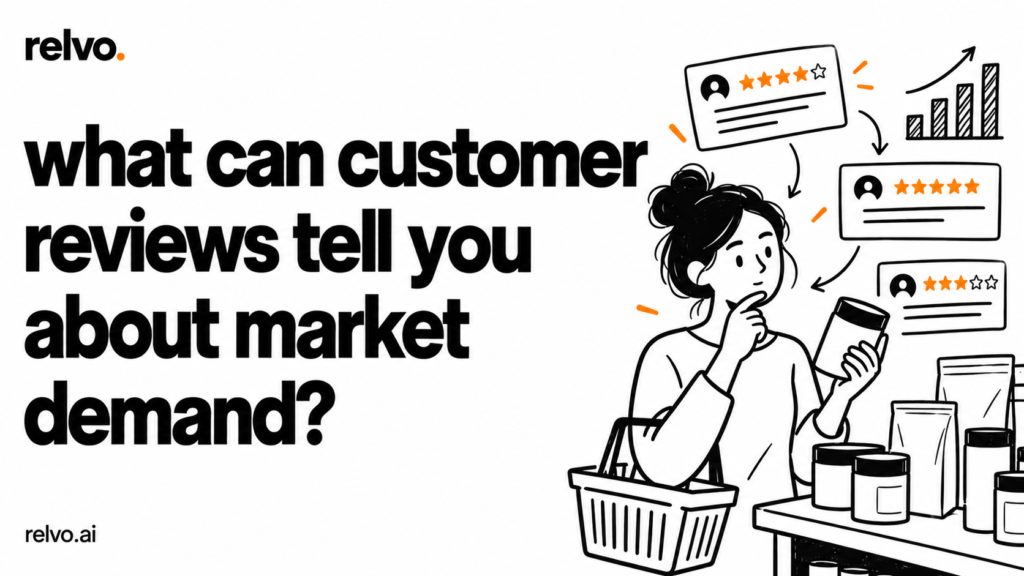
use customer reviews to study experiences and buying decisions while keeping selection bias, review quality, and limits on demand estimates visible.
how do you research competitors’ customers without misreading your market?
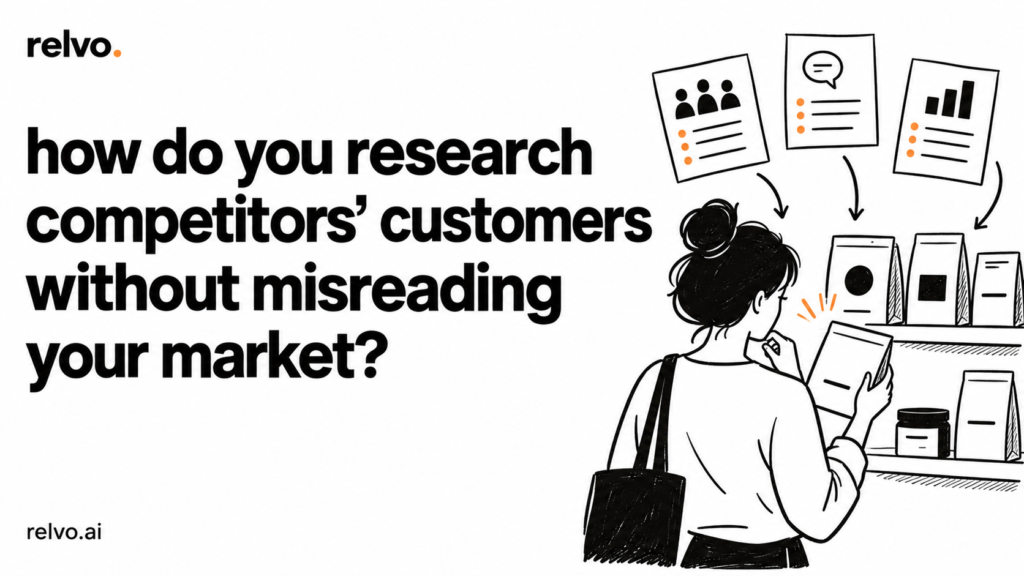
learn how to analyze competitors’ customer evidence, separate category patterns from company facts, and turn findings into hypotheses worth testing.