in brief
- Customer findings can disagree because samples, use situations, timing, product versions, or methods differ.
- Keep conflicting evidence visible and check what each source actually measured before averaging it.
- A contradiction can point to a useful distinction or an unresolved gap; it does not always need one universal answer.
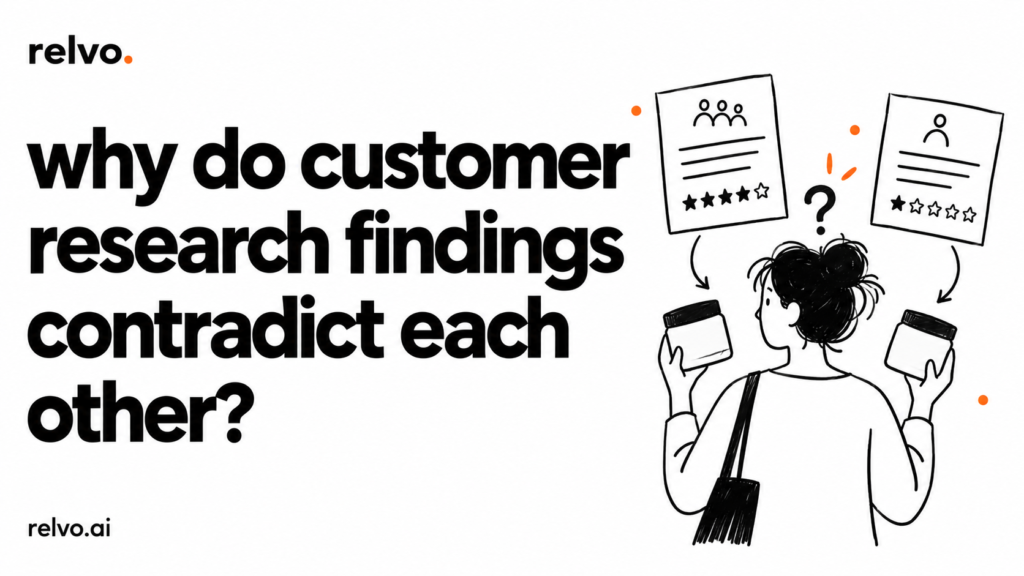
Customer research findings contradict each other when they concern different people, situations, periods, or questions, or when one interpretation goes beyond its evidence. Investigate those differences before deciding that one study is wrong.
A premium cereal can be described as convenient by a commuter and expensive by someone buying breakfast for a household. Those accounts can both be accurate. A summary saying “buyers are divided” hides the circumstances that would help a commercial decision.
what should you compare first?
| dimension | question to ask |
|---|---|
| Sample | Who was included and who was missing? |
| Situation | What was the product meant to replace or accomplish? |
| Time | When did the event happen? |
| Version | Which recipe, pack, price, or service was involved? |
| Method | Was this observation, testimony, survey response, or simulation? |
| Question | Did the studies ask about the same outcome? |
what can new coke illustrate about apparently conflicting evidence?
Coca-Cola’s New Coke history distinguishes taste-test preference from attachment to the original product. Evidence about one judgment did not fully answer the other.
Our interpretation is that findings can look contradictory when a team silently treats different outcomes as equivalent. Preference in a taste test and acceptance of replacing a familiar product should be written as separate claims.
Keep the disagreement visible until you know whether it concerns the evidence, the interpretation, or two different questions.
research note from relvo
how do you check a theme against contrary cases?
Return to the source passages. Confirm that each account belongs in the theme and that repeated records are independent. Examine material that does not fit. Avoid removing a contrary case simply because it makes the headline less decisive.
Then ask whether the pattern changes by a meaningful buying situation. A product used every day can be assessed differently from the same product bought as a gift. Do not create a demographic segment merely because it makes the contradiction easier to describe.
hypothetical interpretation
One group describes a snack as a useful emergency option; another rejects it for everyday breakfast. A reasonable next question is whether occasion explains the difference. The evidence does not yet justify a claim that one demographic group universally prefers it.
when does disagreement call for new research?
When it changes the decision and the existing source detail cannot resolve it. If pricing research disagrees because different price points were shown, first align the conditions. If the same buying situation still produces incompatible explanations, recruit relevant participants and investigate the missing context.
More interviews should examine a named gap, not repeat the same question until a preferred answer wins. Where behavior is disputed, appropriate records or an experiment may be more useful than another account.
how should confidence be reported?
Describe independence of sources, directness, recency, relevance, and contradictions. Avoid an unexplained confidence percentage. A reader should be able to see why the analyst trusts a narrow finding and where that trust stops.
relvo reports evidence-quality readings with reasons and keeps market-level conclusions separate from company evidence. It does not turn unresolved disagreement into a forecast. See how customer knowledge retains evidence and limits for the underlying approach.
Bring the conflicting question and the decision it affects, so the next research task can be specific. Bring that question to relvo.