in brief
- Product praise describes appeal or experience; it does not establish urgency, budget, availability, or a purchase.
- Investigate the relevant occasion, current alternative, price, credibility, and cost of changing.
- Separate message understanding, liking, and actual action, then test the gap most likely to affect the decision.
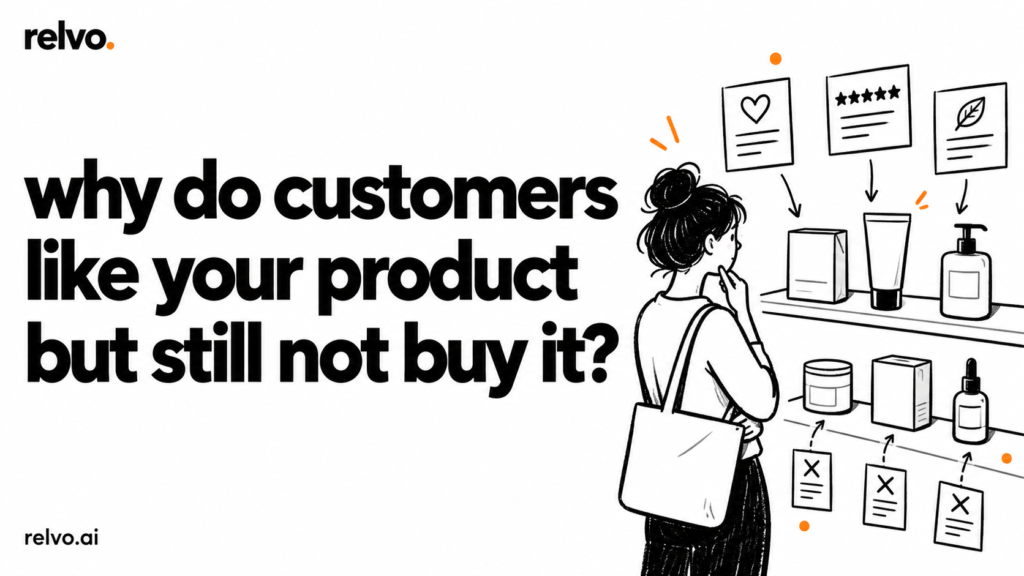
Customers can like a product and still not buy it because the benefit is not urgent, the price does not fit, the offer is hard to access, or the current alternative is good enough. Research should identify which constraint matters in the actual buying situation.
A positive interview response can also reflect curiosity rather than a ready purchase. Do not infer dishonesty from the gap. Ask what the person was deciding and what the proposed product would replace.
what can expressed interest establish?
LEGO Ideas’ published process treats support as a route to consideration for production. That interest is not the same event as someone buying a finished set.
For a research team, that distinction matters when deciding what to do with enthusiasm: interest can justify another investigation while the price, availability, and purchasing action remain unresolved.
The useful follow-up to praise is a question about the buying situation, not another request for approval.
research note from relvo
which constraints should research examine?
| possible gap | neutral question |
|---|---|
| Urgency | When did you last need something for this problem? |
| Alternative | What did you use or buy instead? |
| Price | What would this replace in your spending? |
| Trust | What would you need to know before deciding? |
| Availability | Where would you expect to find or use it? |
| Switching effort | What would have to change in your current routine? |
These questions do not assume the product deserves a purchase. They help establish whether it has a relevant job in the person’s life. A product can be admired while remaining unnecessary for that particular buyer.
how would this work for a consumer brand?
hypothetical breakfast example
A shopper likes a new yogurt’s taste but usually eats breakfast while traveling. The offer may be awkward for that routine. Another shopper finds the pack convenient but buys only on promotion. These are different constraints. The examples are illustrative, not real buyer quotations.
Recruit people facing the relevant choice, including those who considered and declined. Ask about recent action before asking for explanations of a future choice. Preserve a missing answer when someone cannot remember what happened.
how do you separate appeal from purchase evidence?
Report understanding, appeal, credibility, and action separately. A participant may understand the product and dislike it, or like it while misunderstanding the benefit. An overall favorable-response score can obscure the issue the team needs to solve.
If you run a behavioral test, describe the offer and conditions. A discount, free sample, or unusual channel can affect the action measured. A trial purchase does not establish that the buyer will return at the normal price.
what should you do with the finding?
Choose the smallest test that addresses the identified constraint. If availability is the issue, rewriting the slogan may not help. If the benefit is misunderstood, changing the formulation may be premature. Keep the explanation provisional until the appropriate evidence supports it.
Read why “would you buy this?” needs a stronger research design for question examples, and how review praise differs from demand evidence for interpreting published opinions.
Bring the gap between praise and action as a research question, with the offer and buying situation attached. Bring that question to relvo.